Honoring the Women Who Fed Us: Veganizing Ancestral Dishes for Women’s History Month
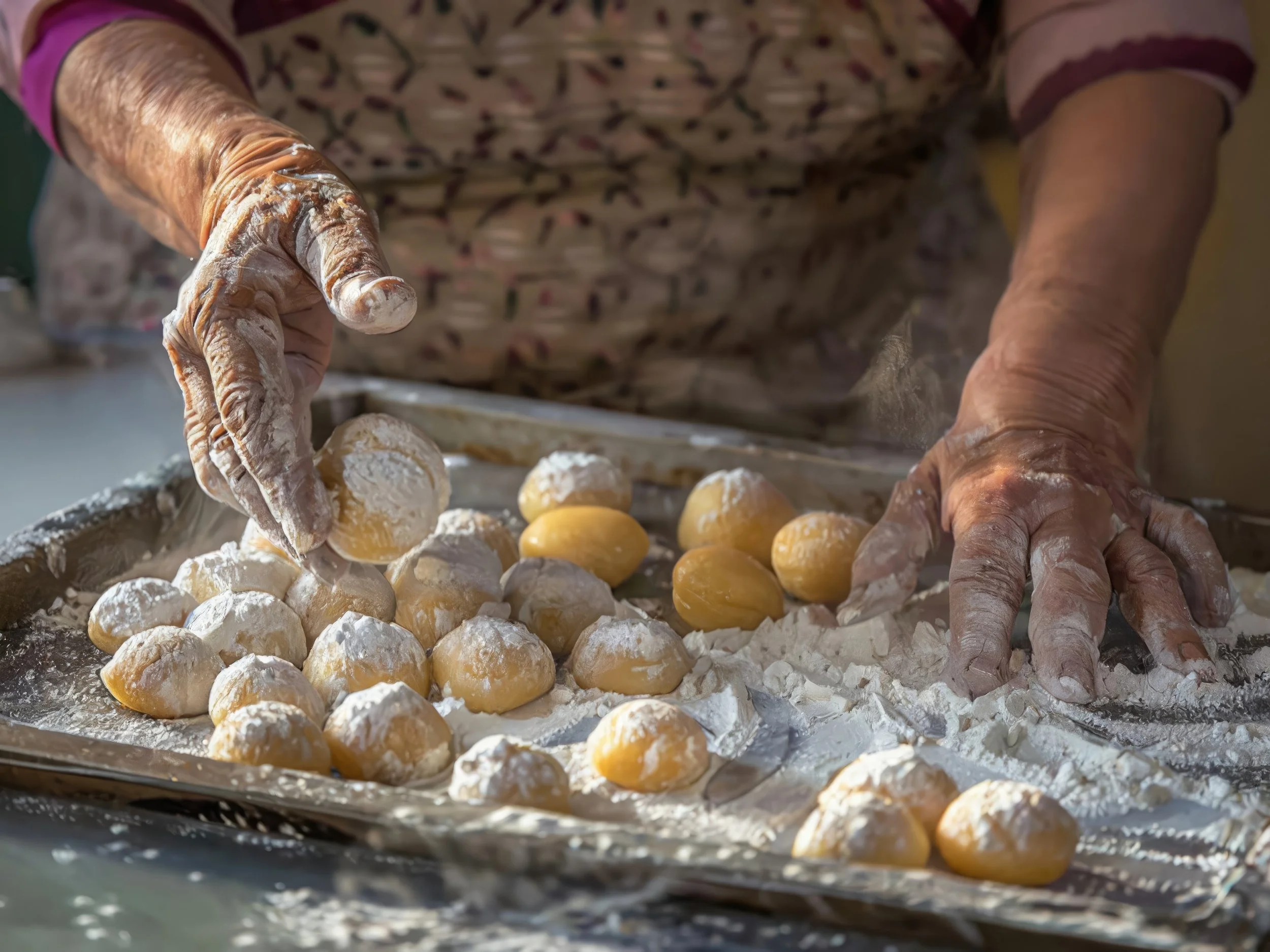
By Kisa The VeganizerWhen I think about Women’s History Month, I don’t just think about iconic names in textbooks. I think about my foremothers—the women who taught me what it means to make a home out of simple ingredients, a recipe out of memory, and a feast out of love. I trace my culinary lineage to three generations of kitchen alchemists: my great‑grandmother (Big Mama Upchurch), my grandmother (Big Mama Dorothy), and my mother (Renee). Their kitchens were classrooms and sanctuaries where biscuits rose like morning prayers, onions surrendered to gravy, and the stories of our family were stirred into every pot. Those women shaped my palate and my purpose, and they continue to shape what Kisa The Veganizer stands for today: empowering home cooks to create plant‑based food that steals the spotlight and keeps everyone—vegans and omnivores—coming back to the table.
This essay is both love letter and toolkit: a celebration of the women who fed us, and a practical guide to carrying those flavors forward—with mindful choices, simple swaps, and a little food science to make the magic happen.
Migration, Memory, and the Menu
Our family’s foodways—like those of many Black families—were shaped by movement, especially the Great Migration from the rural South to the industrial North. Between 1916 and 1970, over six million African Americans moved north and west, carrying recipes, techniques, seeds, and the muscle memory of Southern kitchens into cities like Detroit, Chicago, and New York. That movement didn’t just change demographics; it remixed the national menu.
As people resettled, Southern staples like cornbread, greens, legumes, and barbecue traveled with them—anchoring community in unfamiliar places and evolving as new ingredients and economic realities came into play. Restaurants, church basements, and community halls became cultural hubs where meals held memories together and created new traditions. The stories of hucksters and home cooks—of street vendors selling vegetables or seafood, of collards stretched with ingenuity—are reminders that foodways are an archive of survival and joy.
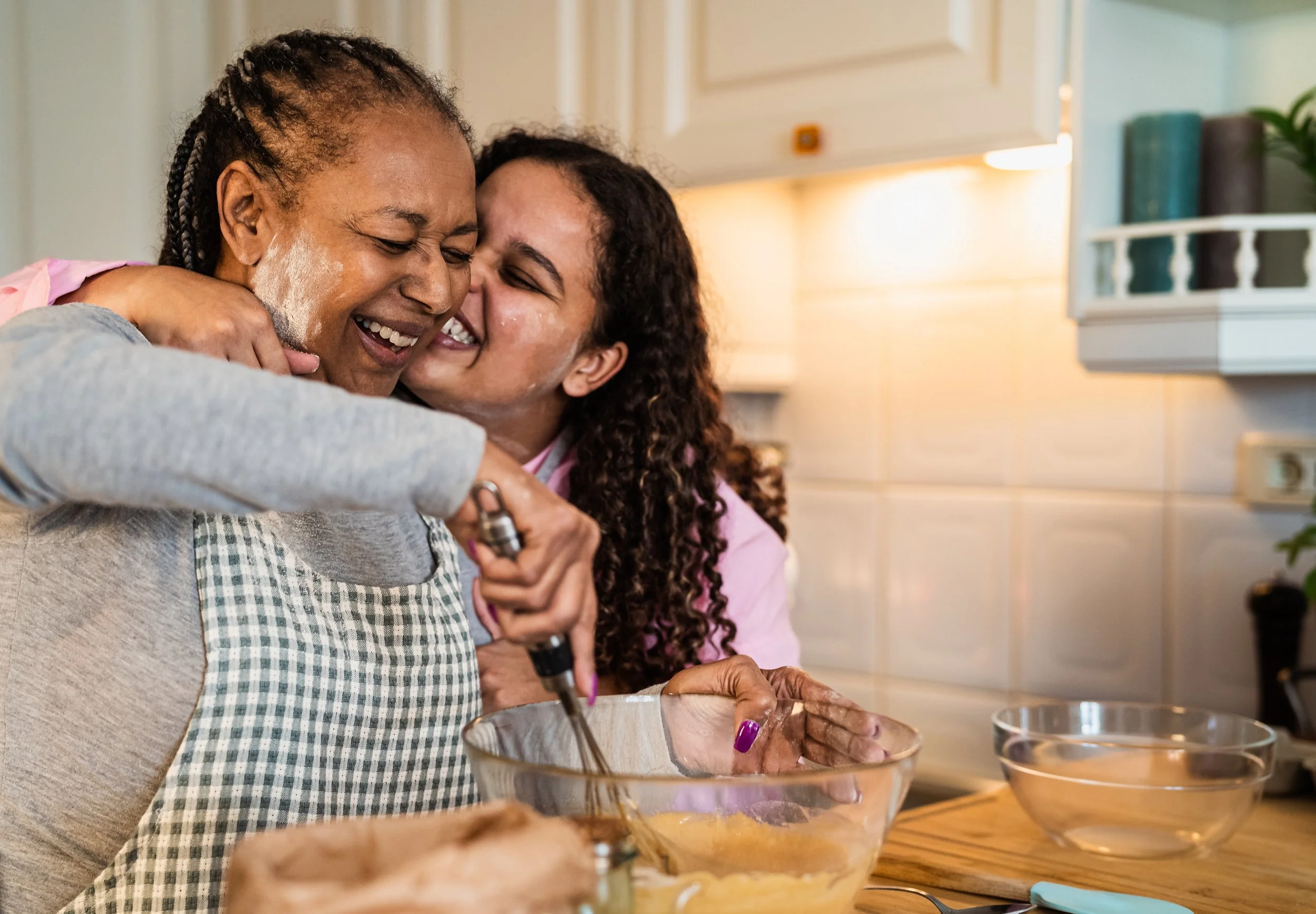
I grew up with that heartbeat of tradition. My great‑grandmother’s table—famous in our family for Sunday spreads—taught me that food connects stories and sustains hope. My grandmother’s mac and cheese was the yardstick by which all comfort was measured. My mother, a true emissary of hospitality, showed me that feeding people is a way of seeing them, honoring them, and gathering the scattered pieces of a week back into one bowl. Those lessons are the bones of my cooking, even as I veganize the dishes I inherited and teach others to do the same.
Why Changing “What Grandma Did” Feels So Hard
For many home cooks, altering a beloved family recipe—especially one tied to a holiday or rite of passage—can feel like a betrayal. We worry the flavors won’t measure up, that Auntie will notice, that the memories will slip if the ham hock is missing from the greens. But traditions are portable. Our foremothers carried them across state lines, job shifts, and apartments with busted ovens. If they could adapt without losing themselves, then we can, too.
Staying mindful is where it gets hard. On a hectic weeknight, it’s easier to rely on the meat‑heavy default you can make with your eyes closed. The trick is shortening the distance between intention and action—by learning a few dependable swaps and understanding just enough food science to get Grandma‑level results without Grandma’s ingredients. That’s the heartbeat of “veganizing” done right: honoring memory while choosing foods that support our bodies and our future. It’s what I teach in classes and demos: don’t compromise on flavor—upgrade the technique.
The Food‑Science Behind Satisfying Swaps (Made Simple)
Think of this as a translation guide from nostalgia to method. We’re not reinventing the wheel; we’re learning how it spins.
1) Creaminess without dairy
What we miss: body, gloss, and that comforting, silky mouthfeel in sauces, pot pies, gravies, and mac.
The simple science: Creaminess is an emulsion—tiny fat droplets suspended in water. At home, you can recreate it by balancing fat, water, and a thickener. Soaked cashews blended with water become a neutral, luscious “cream” that behaves beautifully in savory dishes; a quick hot‑soak tames raw notes and yields a cleaner flavor.
How to do it tonight:
Cashew cream for heavy cream or evaporated milk: hot‑soak cashews, blend with fresh water until smooth, and season.
Plant butter + flour (roux) for gravies and pot pies: the roux is your thickening “engine,” and plant butter brings aroma and sheen.
Tapioca or potato starch for “cheese” sauces: whisked into a cashew base with a little plant fat, it gives that glossy, clingy texture.
2) Umami and “meaty” satisfaction without meat
What we miss: savory depth, chew, and browned bits.
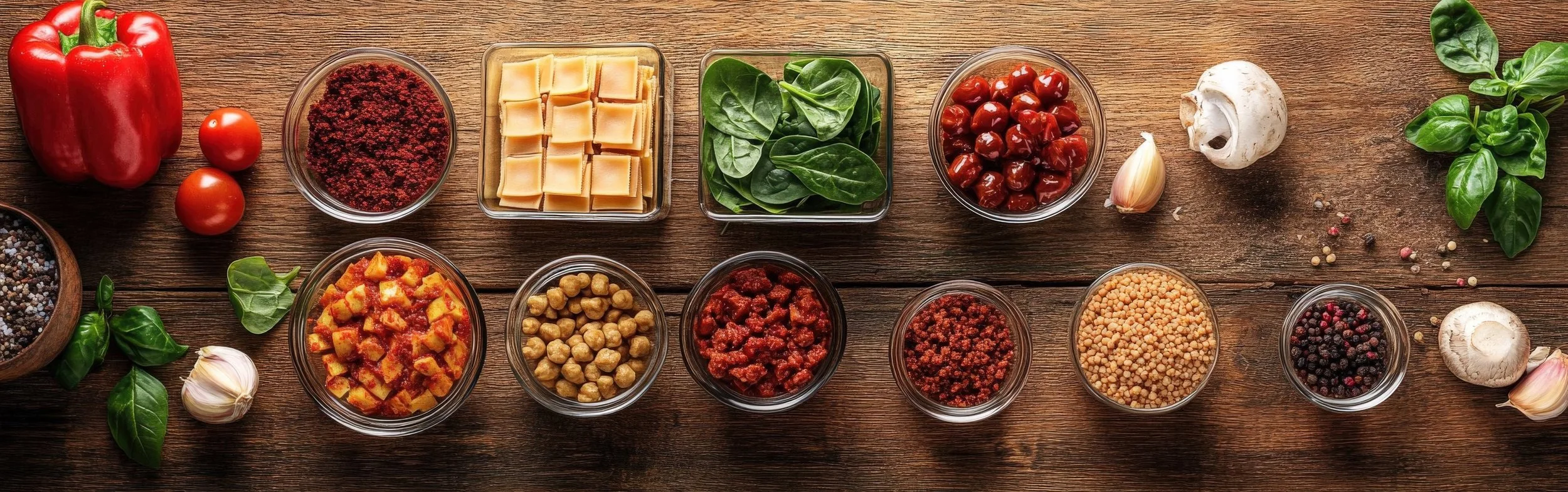
The simple science: Umami comes from glutamates; browning (the Maillard reaction) builds complexity; and chew depends on moisture and fat balance. A trio of mushrooms+lentils+walnuts nails these variables: mushrooms bring umami and moisture, walnuts add fat and texture, and lentils supply protein and structure. Season boldly (tamari/soy, tomato paste, smoked paprika) and cook the mixture dry until it’s browned and crumbly. It drops into tacos, spaghetti sauce, sloppy joes—or the filling of a Sunday pot pie.
3) Cheesy pull and melty finishes without dairy
What we miss: stretch, melt, and that dairy‑like savor in macs, casseroles, and gratins.
The simple science: Dairy cheese melts because of casein networks and fat distribution. At home, you can mimic the experience with starch gels (tapioca/potato) + plant fats + savory seasonings (nutritional yeast, mustard, garlic). If you really want to nerd out, food researchers use enzymes like transglutaminase to fine‑tune melt and firmness—but you don’t need lab gear to make a silky, “cheesy” sauce your family will love.

A Women’s History Month Menu—Rooted and Veganized
Here’s a table that channels a The Great Migration spirit—updated for mindfulness and ease:
Big Mama’s Sunday Pot Pie, Veganized. Sauté onion, carrot, celery, and mushrooms in plant butter; make a light roux; whisk in cashew milk and veggie stock; fold in peas, potatoes, and your mushroom‑lentil‑walnut “chicken.” Finish under a flaky crust (store‑bought vegan crusts work in a pinch). The result? Familiar aroma, luscious filling, and that satisfying crack of pastry when you dig in. (I demo this technique often; the principles are the same every time.)
Cast‑Iron Skillet Cornbread, Plant‑Powered. Use cultured vegan butter and unsweetened plant milk soured with lemon or apple cider vinegar. Preheat the pan so the batter hits hot fat—Grandma’s rule still applies.
Avocado Chocolate Pudding (KTV‑style). Silky, rich, dairy‑free, and ready to convert skeptics. (Check out the video here.)
Mindfulness, Health, and the Power of Knowing Why
It’s one thing to follow a recipe; it’s another to understand why it works. That little bit of knowledge turns weeknight cooking into confident improvisation: you become the person who can pivot when the store is out of your favorite brand, who can keep the spirit of the dish even when the ingredients shift, like our foremothers did. You’re not just copying; you’re creating.
When you grasp emulsions, you’re not at the mercy of dairy for creaminess. You can build it from cashews or oats, then fine‑tune the thickness with heat and starch.
When you understand umami and browning, you stop fearing “bland vegan food”—you learn to cook plant proteins and mushrooms to a deep, savory finish.
When you appreciate the cultural history beneath a dish, you can change an ingredient without losing the essence—because you know what you’re trying to evoke: a Sunday table, a homecoming, a grandmother’s laugh.
This blend—history + foodways + food science—isn’t just satisfying. It’s powerful. It puts you in the driver’s seat of your family’s wellbeing: reducing saturated fats, increasing fiber and plant diversity, and supporting longevity, all while cooking food that tastes like home. And yes, you can absolutely do this on a Tuesday.
Quick‑Start: A “Swap Map” for Three Beloved Dishes
Use this cheat sheet when your brain says, “Just make it the old way.”
Greens → Smoky Braised Collards
Swap: umami from miso/tamari, smoke from paprika or a drop of liquid smoke; finish with vinegar for lift.
Tip: layer flavor slowly with onions and garlic before adding greens.Buttermilk Biscuits → Plant‑Buttermilk Biscuits
Swap: lemon‑soured plant milk + cultured vegan butter.
Tip: keep fat cold; fold gently for lift (same physics, different fat).Smothered Gravy → Brown Mushroom Gravy
Swap: a dark roux with plant butter; deglaze with vegetable stock + a dab of tomato paste + tamari.
Tip: toast the flour until nutty for true gravy depth—finish with a splash of cashew cream if you want extra body.

Bringing It Back to the Table
In my home and in my classes, I come back to a simple truth I learned at my foremothers’ elbows: food is how we remember who we are—and how we decide who we want to be. When we choose to veganize with care, we’re saying:
Our stories matter enough to keep cooking them.
Our bodies matter enough to cook them differently.
Our planet matters enough to do both, again tomorrow.
So this month, pick one dish that carries your family’s story—maybe Grandma’s pot pie, Auntie’s greens, or that cobbler that tastes like summer. Veganize it with intention. Use the science to hit those familiar textures and flavors. Then tell the story to whoever’s at your table—your partner, your kids, your neighbor, yourself. The most powerful ingredient any of us can pass down is knowledge: of where we came from, how our people fed us, and the delicious ways we can care for our future.
I’ll be right here to help—teaching, testing, tasting, and cheering you on—so that the vegan option at your table doesn’t just fit in. It shines
From Kisa with Love!